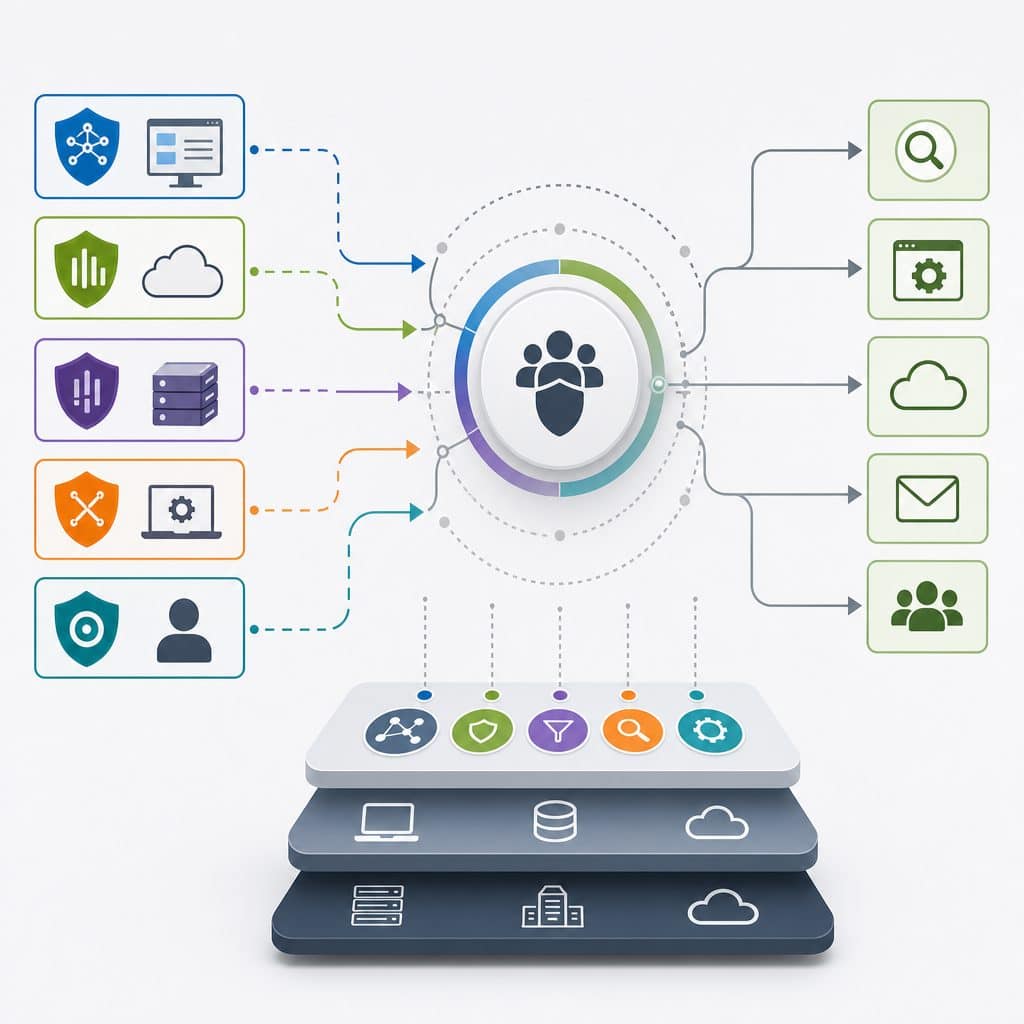
CrowdStrike Falcon Complete is a strong managed endpoint detection and response offer, especially for organizations standardizing on Falcon Prevent, Insight, OverWatch, and the broader CrowdStrike platform. It gives buyers a named operating model: CrowdStrike technology, CrowdStrike analysts, and 24/7 response workflows under one contract. For many teams, that simplicity is valuable.
The challenge appears after procurement. Security leaders still need coverage for identity, email, cloud, network telemetry, vulnerability context, compliance evidence, escalation governance, and business-specific response decisions. They may also need help integrating existing SIEM, firewall, Microsoft, Cisco, Palo Alto, or cloud-native controls. Falcon Complete may be the right answer, but it is not the only answer.
This guide compares practical alternatives, not just logo-to-logo competitors. Some options replace Falcon Complete with another managed XDR provider. Others keep CrowdStrike but change who operates it. Clearnetwork often sees the second path deliver better business outcomes when the technology is sound but the organization needs more flexible operations, broader monitoring, and experienced incident handling.
A replacement decision should start with the operating problem. If your team is overwhelmed by endpoint alerts, the priority is high-fidelity triage and rapid containment. If the board is asking about ransomware readiness, the priority expands to identity abuse, backup exposure, lateral movement, privileged access, and tested response playbooks. If auditors are driving the project, evidence, reporting, retention, and change control matter.
Authoritative research supports a broader view. IBM’s 2024 Cost of a Data Breach Report put the global average breach cost at $4.88 million. Verizon’s 2024 Data Breach Investigations Report continued to show the importance of credential abuse, human error, and third-party exposure. Mandiant’s M-Trends 2024 report highlighted persistent dwell time and detection gaps. Endpoint protection is essential, but mature defense depends on coordinated visibility and disciplined operations.
The best shortlist depends on risk, staffing, budget, existing tools, and compliance pressure. In most mid-market and enterprise evaluations, these seven categories deserve discussion.
| Alternative | Where it fits | Tradeoff |
|---|---|---|
| Managed CrowdStrike through an MSSP | Organizations that like Falcon but need broader operations, tuning, SIEM correlation, and escalation support. | Requires clear role definition between CrowdStrike, the MSSP, and the internal team. |
| Microsoft Defender Experts or Defender plus MSSP | Microsoft-centric organizations using Defender for Endpoint, Sentinel, Entra ID, and Microsoft 365. | Strong ecosystem economics, but tuning and incident ownership still need attention. |
| Sophos MDR | Small and midsize teams wanting packaged MDR with endpoint, network, cloud, and email options. | Less flexible when buyers have complex heterogeneous tooling or strict custom workflow needs. |
| SentinelOne Vigilance or managed SentinelOne | Teams preferring autonomous endpoint protection and a different EDR architecture. | Service depth varies depending on whether support is vendor-led or partner-led. |
| Palo Alto Cortex XDR with MDR support | Enterprises standardizing on Palo Alto network, cloud, and endpoint telemetry. | Can be powerful, but architecture and licensing can become complex. |
| Arctic Wolf Managed Detection and Response | Organizations seeking vendor-neutral security operations with concierge-style delivery. | May not satisfy buyers seeking deep hands-on operation of every existing control. |
| Build internal SOC with co-managed support | Large organizations that want control, internal career paths, and custom detection engineering. | High staffing, tooling, process, and 24/7 coverage burden. |
For many organizations, the most practical alternative to Falcon Complete is not abandoning Falcon. It is using Falcon as the endpoint control plane while engaging an MSSP to operate across the full security program. That model can preserve agent investment, endpoint telemetry, and prevention policy while adding broader context from SIEM, firewalls, cloud logs, identity systems, vulnerability scanners, and business applications.
Clearnetwork provides Managed CrowdStrike support for teams that want expert monitoring, alert triage, policy tuning, escalation discipline, and response assistance without being locked into a single-vendor service boundary. This is especially useful when Falcon is one critical signal among many rather than the entire detection estate.
This model helps when you need:
Microsoft Defender for Endpoint, Microsoft Sentinel, Entra ID, and Microsoft 365 Defender are compelling for organizations already invested in E5 licensing. The business case often centers on tool consolidation and data gravity. If endpoint, identity, email, and productivity telemetry already live in Microsoft, expanding the security stack can reduce integration friction.
The tradeoff is operational maturity. Defender value depends on licensing clarity, policy design, Sentinel analytics, identity protections, mailbox investigation, and automation governance. Many teams discover that owning the Microsoft stack does not automatically mean they can monitor it effectively every hour.
A provider offering Managed Detection and Response can help by validating detections, tuning Sentinel rules, investigating suspicious identity activity, and coordinating containment decisions. This approach is strong when Microsoft is strategic, but it should be evaluated against response speed, data retention cost, and analyst experience.
Providers such as Sophos MDR, Arctic Wolf, Red Canary, eSentire, and Secureworks can be strong alternatives when the buyer wants a defined service instead of designing an operating model from scratch. These providers differ substantially in telemetry support, response authority, integration depth, reporting, threat hunting, and account management.
Packaged MDR is attractive for lean teams because the buyer can purchase coverage quickly and point executives to a clear service description. The risk is fit. Some services are excellent within their supported stack but less effective when the environment includes legacy systems, multiple cloud platforms, OT networks, regional subsidiaries, or custom applications.
During evaluation, ask for sample investigation timelines, escalation examples, supported response actions, integration lists, and reporting packages. Also ask what happens when an alert involves a tool outside the provider’s native ecosystem. The answer reveals whether you are buying detection coverage or a durable security operations partner.
Some organizations compare Falcon Complete with building an internal SOC. Control is the attraction. Internal analysts can learn business context, write custom detections, support investigations directly, and align with enterprise risk teams. For regulated enterprises, that control may be worth the cost.
The operational burden is real. A credible SOC needs 24/7 staffing, tiered analysts, detection engineers, incident handlers, content management, quality assurance, tooling administration, metrics, training, and surge capacity. Hiring and retaining that team is difficult in a market where experienced defenders are scarce.
A co-managed SOC model can reduce the burden. Clearnetwork’s Managed SOC Services help organizations monitor, investigate, tune, document, and respond across endpoint, SIEM, network, cloud, and identity signals. Buyers keep governance while gaining analyst coverage and proven procedures.
Marketing comparisons usually emphasize platform breadth. Buyers should go deeper. The right alternative must fit how incidents actually unfold inside your company, including after-hours approvals, legal notification, cyber insurance requirements, change windows, and the politics of taking a business system offline.
Use direct questions in demos and contract reviews. Vague answers are a warning sign.
Strong providers answer with operating details, not slogans. They can show sample deliverables, define service boundaries, and explain how analysts make decisions under pressure.
Clearnetwork is not positioned as a single-tool reseller that disappears after deployment. The value is operational: helping organizations run security technologies, monitor signals, investigate credible threats, tune noisy controls, document evidence, and coordinate response. That matters when a team owns good tools but lacks the time, coverage, or specialized experience to use them consistently.
In an alternative assessment, Clearnetwork can help clarify whether you should replace Falcon Complete, keep Falcon with independent managed support, consolidate around Microsoft, adopt packaged MDR, or build a co-managed SOC. The recommendation should follow your risk profile and operating constraints, not a vendor quota.
For organizations that need outsourced coverage, Clearnetwork can also discuss SOC as a Service as a practical route to 24/7 monitoring without building every process, shift, and escalation path internally.
The following scenarios are not rules, but they help translate product comparisons into operating decisions.
| Scenario | Likely path | Reason |
|---|---|---|
| You like Falcon but need broader monitoring. | Managed CrowdStrike through Clearnetwork. | Preserves endpoint investment while expanding operations across SIEM, identity, cloud, and network evidence. |
| Microsoft E5 is already funded. | Defender plus managed operations. | Reduces tool overlap, but requires expert configuration, triage, and Sentinel governance. |
| Security team has no 24/7 coverage. | Packaged MDR or SOCaaS. | Provides immediate monitoring capacity while internal processes mature. |
| Complex enterprise wants control. | Co-managed SOC. | Balances internal governance with external analyst depth and surge capacity. |
Yes. It can be an excellent choice for organizations committed to the Falcon platform and comfortable with a vendor-led operating model. The point of evaluating alternatives is not to dismiss Falcon Complete; it is to confirm fit against coverage, response authority, integration needs, and commercial flexibility.
Not necessarily. Noise may reflect policy design, environment exceptions, weak triage processes, or missing context from other tools. Before replacing the platform, assess whether better tuning and managed investigation would solve the problem.
The hidden cost is usually internal time. Even managed services require decisions, approvals, asset context, and remediation ownership. A provider that reduces coordination friction can be more valuable than one with a lower subscription price.
Start by documenting the incidents you most need to prevent or contain: ransomware, credential theft, business email compromise, cloud compromise, insider misuse, or regulatory reporting failure. Map those scenarios to required telemetry, response actions, decision owners, and evidence. Then compare providers against that operating model instead of comparing datasheet claims.
Also decide what you expect from a partner during stressful moments. Do you need someone to wake the right administrator, isolate a system, interpret identity logs, brief executives, preserve evidence, and recommend next steps in plain language? Do you need recurring tuning, service reviews, and guidance that improves controls over time? If yes, evaluate alternatives by operational accountability. The best service is the one your team can rely on at 2 a.m., when alerts, business pressure, and incomplete information collide.
Clearnetwork can help you assess the current endpoint estate, review alert workflows, identify visibility gaps, and design a managed operating model that fits your staff and risk tolerance. Whether the answer is Falcon Complete, a managed CrowdStrike model, Microsoft-centric MDR, or a co-managed SOC, the decision should be evidence based, not fear driven or rushed.
Cut EDR alert fatigue without creating blind spots. Learn to prioritize high-risk signals, automate enrichment,…
Secure third-party remote access with MFA, accountable owners and complete visibility—critical as vendors feature in…
Turn PCI DSS 4.0.1 monitoring into faster payment threat response—master Requirements 10, 11 and 12,…
Protect plant uptime with passive OT security monitoring. Map legacy assets, baseline traffic, and detect…
Contain a Microsoft 365 BEC in 24 hours: revoke sessions, preserve evidence, stop payment fraud,…
Make SIEM costs predictable with a 4-layer TCO model covering licensing, data ingestion, security operations…