
Blackpoint Cyber Alternatives: How to Choose the Right MDR and SOC Partner
Blackpoint Cyber is a respected MDR provider, especially among MSPs that want outsourced detection, endpoint visibility, and fast human response without building a 24/7 SOC. But “alternative” does not always mean “replacement.” For many buyers, the real question is whether their security program needs a narrower MDR platform, a broader managed SOC partner, deeper SIEM operations, stronger compliance support, or help running existing tools better.
This guide compares Blackpoint Cyber alternatives from an operational buyer’s perspective. It explains where organizations typically look next, what tradeoffs matter, and how Clearnetwork supports teams that need experienced analysts, disciplined tuning, investigation workflows, and response coordination across their cybersecurity stack.
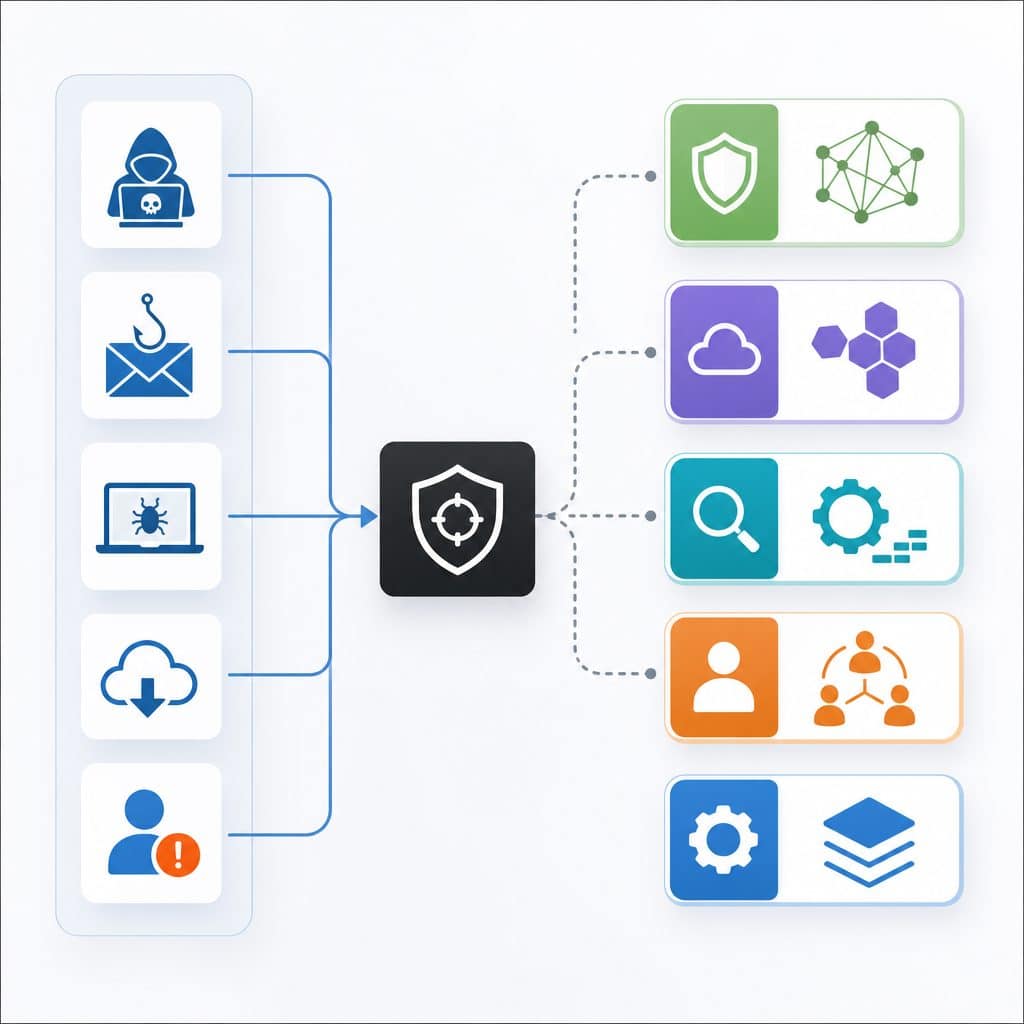
Why Security Teams Evaluate Blackpoint Cyber Alternatives
Common triggers include tool consolidation, a new cyber insurance requirement, dissatisfaction with alert context, growth into regulated markets, or a merger that changes endpoint, cloud, and identity architecture. MSSPs also reassess vendors when margin pressure, ticket volume, or customer expectations make a one-size offering hard to operate profitably.
The market is also unforgiving. IBM’s 2024 Cost of a Data Breach Report put the average breach cost at $4.88 million. Verizon’s 2024 Data Breach Investigations Report found that vulnerability exploitation and credential abuse remain major paths into environments. CISA continues urging organizations to improve logging, patching, identity controls, and incident response readiness. Those are not product features alone; they are operating disciplines.
That is why alternatives should be evaluated by outcomes: fewer unmanaged alerts, faster containment, better evidence for audits, clearer accountability during incidents, and security operations that can scale without exhausting internal administrators.
What to Compare Before Shortlisting Vendors
Start with scope. Some providers focus on endpoint telemetry and rapid response actions. Others deliver a broader SOC function, including SIEM monitoring, log correlation, vulnerability context, cloud signals, identity alerts, firewall events, and compliance reporting. Neither model is automatically better. The right fit depends on risk, staffing, budget, and tool maturity.
For example, a company standardized on CrowdStrike may need expert endpoint investigation and containment more than another console. A healthcare provider may need around-the-clock monitoring plus audit evidence mapped to HIPAA safeguards. A regional manufacturer may need a pragmatic path from basic EDR to a repeatable SOC program.
Clearnetwork often helps clients make that distinction. Our role is not merely to resell technology; it is to operate it, tune it, investigate signals, coordinate response, and translate security telemetry into decisions executives and IT teams can act on.
Comparison criteria that matter
Blackpoint Cyber Alternatives by Category
Most shortlists fall into five categories. The names matter less than operating fit, because several providers overlap across MDR, XDR, SIEM, and SOC services.
1. MDR specialists
MDR specialists suit organizations that want expert monitoring around endpoint or XDR telemetry, high-confidence alert triage, and guided response. They can be efficient when the endpoint footprint is clean and ownership of identity, network, and cloud logs remains internal.
2. Managed SOC providers
A managed SOC provider is better when the buyer needs ongoing security operations across multiple technologies. This model usually includes alert triage, investigation, escalation, reporting, and service reviews. Clearnetwork’s Managed SOC Services support teams that need this broader operational layer.
3. SOC as a Service
SOCaaS can be attractive for midmarket organizations that cannot justify hiring overnight analysts or building a full SIEM process. The buyer gains outsourced 24/7 monitoring, but must confirm integration depth, escalation quality, and response authority.
4. Managed SIEM and platform operations
Some teams already own SIEM, EDR, firewall, and cloud tools but lack time to maintain detections and reports. In that case, managed SIEM operations may create more value than replacing platforms.
5. Strategic MSSP support
A strategic MSSP combines monitoring with advisory depth: roadmap planning, control tuning, incident preparation, vendor coordination, and board-ready reporting. This category helps organizations convert fragmented tools into a governed security program.
Clearnetwork as an Alternative for Organizations That Need Operating Support
Clearnetwork is a strong option for organizations that want managed security expertise without losing control of their environment. We help operate and monitor security technologies, tune detections, investigate alerts, coordinate escalation, and support remediation with the client’s IT and leadership teams.
That matters because many security failures are process failures. Alerts are missed because ownership is unclear. SIEM rules decay because no one maintains them. Endpoint tools are deployed but not monitored consistently. Incident plans exist, yet no one has practiced evidence collection or executive notification.
Clearnetwork’s Managed Detection and Response approach emphasizes practical investigation and response support. Where endpoint depth is the priority, we can also help with managed CrowdStrike monitoring, alert triage, and operational care for Falcon environments.
For SIEM-centric programs, Clearnetwork can support log onboarding, use-case tuning, correlation review, and managed AlienVault support where that platform fits the environment.
Where Blackpoint Cyber May Still Be the Better Fit
A credible alternatives article should acknowledge when staying with, or selecting, Blackpoint Cyber may make sense. If your MSP business is already aligned to its model, your customers value its portal and response workflows, and you have clean endpoint coverage, switching may create disruption without enough upside.
Blackpoint may also fit buyers who primarily need rapid MDR around supported telemetry and do not require extensive SIEM engineering, multi-platform reporting, or co-managed security program development. The best decision is not brand versus brand; it is service model versus operating need.
Before changing providers, document what is working, what is not, and which issues are contractual, technical, or procedural. Sometimes the answer is a better escalation process. Sometimes it is a different partner.
Decision Framework for Comparing MDR and SOC Providers
Use a structured evaluation instead of relying on demo polish. The following questions expose how a provider will operate after onboarding, when alerts are messy and business pressure is high.
Ask specifically who tunes detections, who writes customer-facing summaries, who joins urgent calls, and how lessons learned become new controls. Those details separate mature operations from outsourced alert forwarding.
Common Alternative Vendors and How to Think About Them
Buyers commonly compare Blackpoint Cyber with providers such as Arctic Wolf, Sophos MDR, Huntress, Red Canary, eSentire, Secureworks, Critical Start, Expel, CrowdStrike Falcon Complete, and regional MSSPs. Each can be the right answer for a specific profile.
Arctic Wolf is often considered for concierge-style security operations. Sophos MDR may appeal to organizations standardized on Sophos controls. Huntress is widely known in the MSP and small-business market. Red Canary and Expel are frequently evaluated by teams seeking strong detection engineering and transparent investigations. CrowdStrike Falcon Complete fits endpoint-heavy environments committed to Falcon.
The important point: compare them against your must-have operating outcomes. If compliance evidence, SIEM tuning, and multi-tool coordination are priorities, a flexible MSSP like Clearnetwork may provide a better fit than a provider optimized for one telemetry lane.
Operational Tradeoffs Buyers Should Not Ignore
Every option has tradeoffs. A highly standardized MDR service can deliver predictable response and pricing, but may limit customization. A broad co-managed SOC can adapt to your stack, but requires clearer governance and more active participation from internal stakeholders.
The same is true for tooling. Replacing platforms may simplify contracts, yet migration consumes time and can create blind spots. Keeping current tools preserves investment, yet value depends on disciplined management. Good providers should be candid about these realities.
Also examine pricing. Per-endpoint MDR looks simple, but total cost may change when log sources, cloud accounts, retention, incident response hours, compliance reports, or premium integrations are added. Ask for a written responsibility matrix and sample monthly report before signing.
How to Run a Practical Evaluation
A good evaluation can be completed in four to six weeks if stakeholders are organized. Include security, infrastructure, help desk, compliance, legal, procurement, and an executive sponsor. Give each vendor the same environment description and incident scenarios.
- Define success metrics, such as mean time to acknowledge, containment speed, alert reduction, audit evidence quality, and stakeholder satisfaction.
- Share sample telemetry sources, including EDR, identity provider, firewall, cloud, email security, vulnerability scanner, and SIEM data.
- Request two investigation walkthroughs: one commodity malware case and one identity-based intrusion with lateral movement risk.
- Validate escalation paths for business-hours incidents, overnight events, ransomware containment, executive notification, and evidence preservation.
- Score cultural fit, because your team will work with the provider during stressful moments, not just quarterly reviews.
If vendors cannot answer operational questions clearly, treat that as a signal. Mature providers can explain both what they do and what remains the customer’s responsibility.
When Clearnetwork Is the Right Shortlist Candidate
Clearnetwork belongs on the shortlist when your organization needs more than alert notification. We are especially relevant when internal IT owns many tools but lacks 24/7 coverage, investigation depth, security engineering time, or a repeatable incident operating model.
We also fit teams that want a provider willing to collaborate with existing vendors instead of forcing a rip-and-replace decision. That flexibility is valuable for organizations with budget constraints, compliance commitments, or complex environments built over years.
Our services are designed around operating discipline: clear onboarding, prioritized detections, analyst-led investigation, practical escalation, reporting that executives can understand, and continuous tuning. The business outcome is a security function that becomes more reliable over time.
FAQ: Blackpoint Cyber Alternatives
What is the best Blackpoint Cyber alternative?
There is no universal best alternative. The right choice depends on telemetry coverage, response authority, compliance needs, internal staffing, and whether you want MDR, SOCaaS, managed SIEM, or a strategic MSSP.
Is MDR enough for a midmarket company?
MDR may be enough when endpoint and identity coverage are mature and compliance demands are modest. If you need multi-tool monitoring, reporting, and operational governance, pair MDR with managed SOC capabilities.
Should we replace our current security tools?
Not automatically. Many organizations get better results by improving monitoring, tuning, integrations, and response processes around tools they already own. Replace tools only when gaps are material and business benefits justify migration risk.
How should MSPs evaluate alternatives?
MSPs should assess margin, analyst workload, customer experience, portal usability, escalation quality, contract flexibility, and support for standardized service packaging. The provider must improve operations, not merely add another vendor dependency.
Next Step: Choose the Operating Model First
Before you choose a Blackpoint Cyber alternative, decide what operating gap you are solving. If the gap is endpoint response, evaluate MDR depth. If the gap is 24/7 coverage, examine SOC process. If the gap is governance, reporting, and tool management, prioritize a partner that can operate across the program. Clearnetwork can help clarify those requirements and build a practical path from today’s environment to a stronger, measurable security operation with less internal strain and clearer accountability.
Talk to Clearnetwork About Managed Security Support


