
Why manufacturing needs MDR built for operations
Manufacturers are attractive targets because downtime is expensive, plants run mixed IT and OT environments, and security teams often inherit legacy systems that were never designed for continuous monitoring. A ransomware event that stops production, delays shipments, or corrupts engineering data can become a board-level business issue within hours.
Managed detection and response, or MDR, gives manufacturers a way to operate twenty-four-hour detection, investigation, and response without building an internal security operations center from scratch. The best MDR providers for manufacturing combine threat intelligence, analyst-led triage, endpoint and identity visibility, cloud and network telemetry, and disciplined escalation playbooks that respect production realities.
This guide explains how to compare MDR providers, where large platforms and specialized MSSPs fit, and why Clearnetwork is a strong partner for manufacturers that need practical managed security services, not another tool to babysit.
What makes manufacturing MDR different
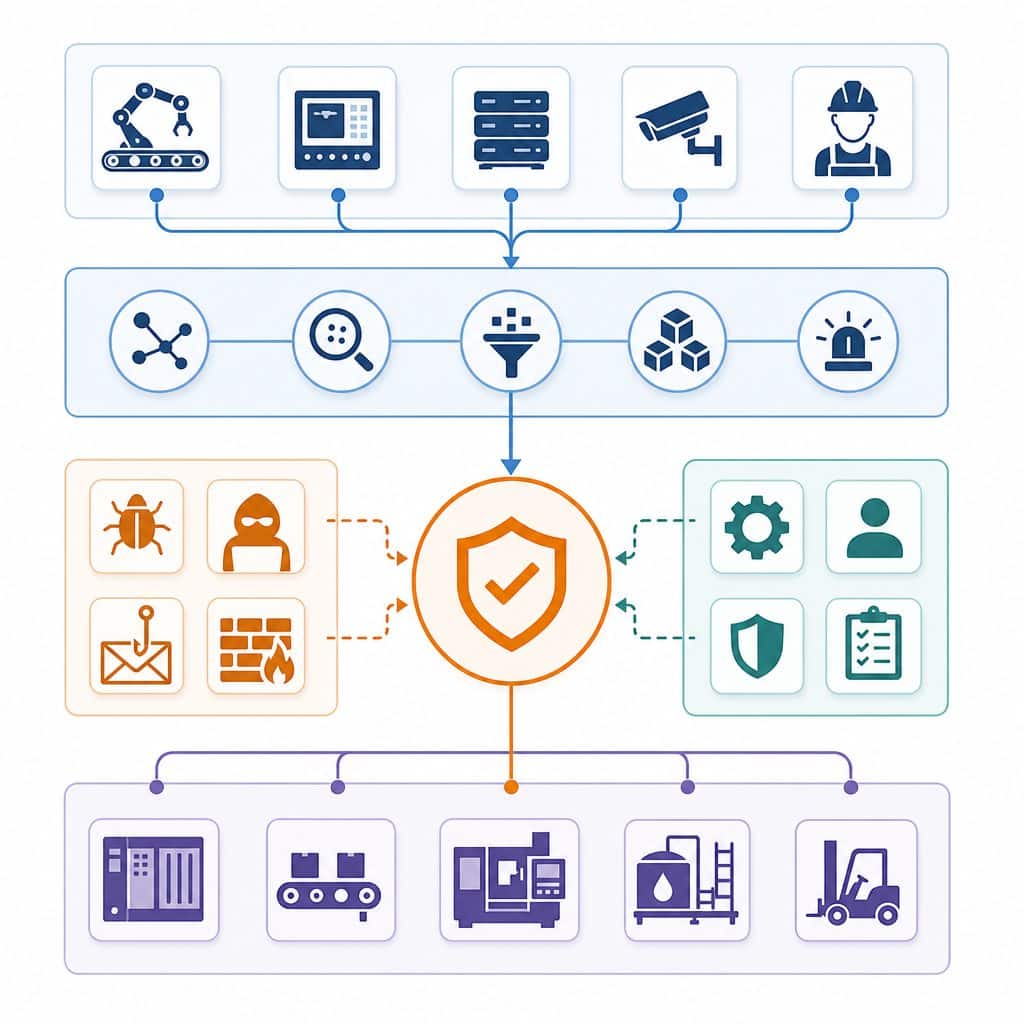
Manufacturing security is not simply office cybersecurity with more machines. Plants depend on programmable logic controllers, historians, engineering workstations, remote maintenance connections, warehouse systems, and supply chain integrations. Many assets cannot be patched quickly. Some cannot run traditional agents. Others require narrow maintenance windows because a reboot can interrupt a line.
That operating context changes the MDR conversation. A provider must separate urgent malicious behavior from noisy operational exceptions, coordinate response with plant leadership, and understand that containment may mean disabling a credential, blocking lateral movement, or isolating a business endpoint before touching production networks.
Authoritative data supports the urgency. Verizon’s Data Breach Investigations Report continues to show ransomware and credential abuse as common breach patterns across industries. IBM’s Cost of a Data Breach research shows detection and containment speed materially affects cost. CISA repeatedly warns that critical infrastructure organizations face active exploitation from criminal and state-aligned actors.
Best MDR providers for manufacturing: practical shortlist
There is no universal best provider. The right choice depends on plant footprint, cloud maturity, internal staffing, compliance obligations, and how much response authority the business will delegate. The following categories reflect how manufacturing buyers usually evaluate the market.
Clearnetwork
Clearnetwork is a fit for manufacturers that want an experienced MSSP to operate, monitor, tune, investigate, and respond across existing security technologies. The value is practical execution: better signal quality, faster triage, and coordinated response.
Microsoft-focused MDR partners
Manufacturers standardized on Microsoft Defender, Sentinel, and Entra ID may benefit from MDR providers deeply aligned to that stack. The tradeoff is ensuring coverage still extends to OT-adjacent network signals, third-party endpoints, and non-Microsoft clouds.
CrowdStrike ecosystem MDR
CrowdStrike-oriented services can be strong for endpoint-led detection and rapid containment, especially across distributed sites. Buyers should validate identity, email, cloud, and firewall integration depth before assuming endpoint coverage equals complete MDR.
Palo Alto Networks Cortex partners
Cortex-based MDR can suit manufacturers already invested in Palo Alto firewalls, XDR, and cloud security. The evaluation point is whether analysts tune detections around plant behavior and produce clear, actionable response guidance.
Managed EDR from large consultancies
Global consultancies bring scale, incident response benches, and governance support. They can be valuable for multinational manufacturers, but buyers should watch for rigid processes, slower customization, and higher minimum commitments.
OT-specialist monitoring providers
OT-native monitoring providers are useful where industrial protocol visibility is the priority. They are not always full MDR providers, so confirm who investigates alerts, contacts whom, and executes containment after hours.
MDR decision criteria for manufacturing buyers
A manufacturing MDR selection process should be operational, not theoretical. Security leaders need to know how the provider will behave on a Tuesday at 2:00 a.m. when an anomalous PowerShell command appears on an engineering workstation, a service account authenticates from a new geography, or a supplier VPN account touches systems it has never accessed.
Ask providers to walk through recent anonymized incidents. A good MDR team will explain the hypothesis, evidence, scope, response decision, communication path, and lessons learned. Weak providers will show dashboards but avoid discussing analyst judgment.
How Clearnetwork approaches MDR for manufacturers
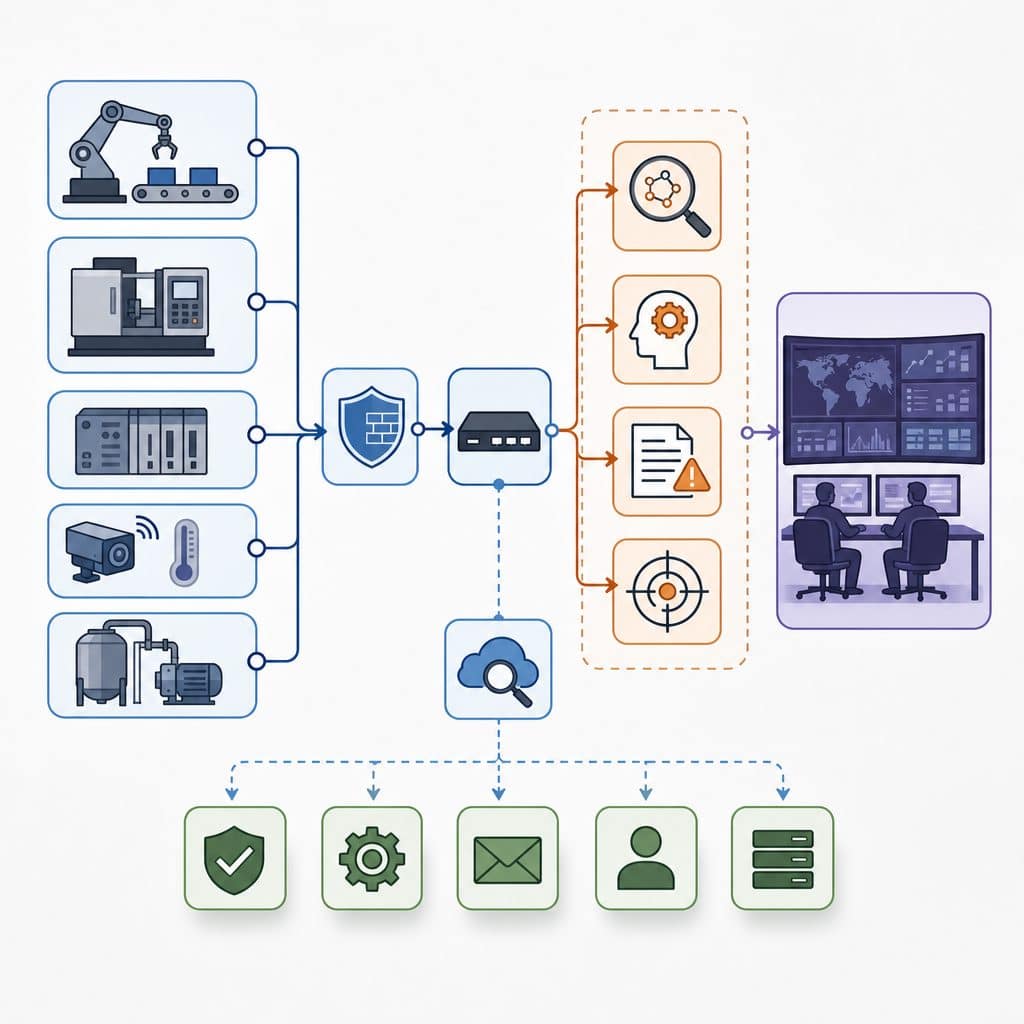
Clearnetwork approaches MDR as a managed operating model, not a product SKU. Many manufacturers already own useful technologies: endpoint protection, SIEM, firewalls, vulnerability scanners, identity controls, email security, and cloud logs. The gap is often skilled operation, correlation, tuning, and response coordination.
As an experienced managed security services provider, Clearnetwork helps clients get more value from their stack. That includes onboarding telemetry, validating log quality, building detection use cases, reducing false positives, investigating suspicious activity, escalating credible incidents, and supporting containment decisions.
For manufacturing environments, the service must also align with operations. Clearnetwork can help define severity tiers, plant contact paths, after-hours escalation, evidence requirements, and response actions that fit the business. The goal is not dramatic console activity; it is dependable risk reduction with fewer surprises.
Core MDR capabilities manufacturers should require
Use the following requirements to separate a robust MDR service from a monitoring wrapper. Not every manufacturer needs the same stack, but every manufacturer needs clear ownership and measurable outcomes.
- Twenty-four-hour monitoring with named escalation paths, not generic ticket queues.
- Endpoint, identity, cloud, email, firewall, and network telemetry correlation.
- Documented response actions, including when analysts can isolate hosts, disable accounts, or request plant approval.
- Detection engineering that adapts to shift patterns, maintenance activity, remote access, and supplier behavior.
- Investigation notes that explain evidence, affected assets, likely technique, business impact, and next steps.
- Regular service reviews covering incidents, tuning, coverage gaps, response metrics, and roadmap priorities.
- Support for tabletop exercises and incident readiness planning with operations, legal, finance, and communications.
Manufacturers should also evaluate how MDR supports frameworks such as NIST Cybersecurity Framework 2.0, CISA Cybersecurity Performance Goals, CIS Controls, and ISA/IEC 62443 concepts. The provider does not need to turn every engagement into an audit, but it should help map operational improvements to recognized practices.
Questions to ask before signing an MDR contract
Procurement teams often compare MDR proposals by price, data ingestion limits, and platform logos. Those points matter, but the bigger differentiators are accountability and response maturity. During evaluation, ask questions that reveal how the service really operates.
- Who reviews high-severity alerts, and what qualifications do those analysts have?
- How quickly will the provider notify plant contacts for critical incidents?
- What data sources are mandatory, recommended, and optional for our environment?
- How are false positives tuned without suppressing important signals?
- What containment actions are available, and which require approval?
- Can we see examples of incident reports, monthly reviews, and executive summaries?
- How does the provider handle OT alerts, industrial network tools, and plant exceptions?
- What happens during a major ransomware event involving multiple sites?
The answers should be specific. If a provider cannot describe escalation timing, evidence standards, or response authority during sales, it is unlikely to become clearer during an incident.
Common MDR tradeoffs in manufacturing
Every MDR model involves tradeoffs. Platform-native services can deliver deep visibility where the platform is deployed broadly, but they may create blind spots when a manufacturer runs heterogeneous tools. Tool-agnostic MSSPs can integrate diverse environments, but onboarding may require more planning and log normalization.
Some providers emphasize speed and automated containment. That is valuable for ransomware, yet automation must be governed carefully around production systems. Others emphasize human validation, which reduces disruption risk but can slow response if escalation rules are unclear.
Cost is another tradeoff. A low monthly price may exclude critical data sources, after-hours response, or tuning time. A higher-cost MDR provider may reduce internal workload and incident impact. Buyers should compare total operating value, not only subscription price.
Implementation roadmap for a stronger MDR launch
A successful MDR rollout is phased. Manufacturing environments are complex, so rushing every log source into production can create noise. A better approach is to establish visibility, validate alerts, define response, then expand.
- Phase one: confirm scope, assets, contacts, data sources, severity definitions, and business constraints.
- Phase two: onboard endpoint, identity, firewall, cloud, email, and SIEM telemetry where available.
- Phase three: tune detections against normal plant activity, remote access, backup jobs, and maintenance windows.
- Phase four: test escalation with tabletop scenarios and simulated high-severity alerts.
- Phase five: review outcomes monthly and add use cases for new sites, acquisitions, and threat trends.
This approach prevents MDR from becoming shelfware. It also gives operations leaders confidence that security monitoring will support production resiliency instead of creating unplanned disruption.
Metrics that prove MDR business value
Manufacturing executives need outcomes, not alert volume. MDR reporting should connect security work to operational risk reduction. Useful measures include:
- Mean time to acknowledge and investigate critical alerts.
- Mean time to contain confirmed threats.
- Percentage of high-value assets covered by active telemetry.
- Reduction in false positives after tuning cycles.
- Number of response playbooks tested and updated.
- Identity, endpoint, and remote access incidents by severity.
- Open coverage gaps with owner, risk, and target date.
The best MDR providers turn those metrics into decisions. If supplier VPN activity is driving investigations, the next business action may be stronger identity controls. If endpoint containment is slow, the next action may be preapproved isolation authority for specific asset classes.
Where MDR fits with broader managed security services
MDR is most effective when it is connected to the rest of the security program. Detection finds active risk, but vulnerability management, identity governance, backup strategy, security awareness, incident response planning, and compliance work reduce the likelihood and impact of incidents.
That is why many manufacturers prefer an MSSP relationship over a narrow alerting service. Clearnetwork can help operate and improve multiple parts of the program, including monitoring, technology administration, security assessments, remediation coordination, and readiness planning. This broader view makes MDR findings more actionable.
For example, an MDR investigation may reveal repeated attempts against an exposed remote access service. A narrow provider closes the alert. A strategic MSSP helps validate exposure, recommend compensating controls, update detections, and confirm whether the change reduced risk.
Final recommendation
The best MDR provider for a manufacturing organization is the one that can protect the business without pretending production environments behave like office networks. Look for strong analysts, broad telemetry, disciplined tuning, clear escalation, and response playbooks that account for uptime, safety, and operational ownership.
Clearnetwork is a strong choice for manufacturers that want experienced managed security services, flexible technology operation, and practical response support. Whether the environment is Microsoft-heavy, endpoint-centric, hybrid cloud, or spread across plants and warehouses, the MDR partner should help the team see risk sooner, act faster, and improve continuously.
Build a manufacturing MDR program that works
Clearnetwork helps manufacturing organizations operate, monitor, tune, investigate, and respond across complex security environments. If your team needs MDR that respects production realities, start with a readiness conversation and a practical coverage review.
Bring your current tools, plant constraints, escalation contacts, and known pain points. Clearnetwork can help identify quick wins, telemetry gaps, tuning priorities, and response decisions that should be documented before the next intrusion attempt becomes a production problem. The result is a focused roadmap for measurable detection coverage, faster containment, clearer accountability, and security operations that support resilient manufacturing performance across every production site.
Request an MDR readiness workshop


