
In the current digital climate, maintaining a secure network is no longer a matter of setting up a strong password and hoping for the best. As we move through 2026, the complexity of IT environments—spanning on-premises servers, remote workstations, and multi-cloud architectures—has made manual oversight nearly impossible.
Organizations are finding that they are only as strong as their weakest link, and often, that link is a forgotten software update or a misconfigured cloud bucket. This reality is driving a surge in the adoption of vulnerability assessment services as a foundational element of a modern defense strategy.
Finding the right partner for these tasks is a subtle art. It requires balancing the need for deep technical scanning with the practical limitations of a business’s budget and operational bandwidth.
Why do some companies seem to bounce back from threats instantly while others crumble? Often, the difference lies in how they identify their gaps before an attacker does. By selecting the right vulnerability assessment services, a firm can move from a state of constant anxiety to one of informed resilience.
The Evolution of Vulnerability Discovery
For a long time, a vulnerability scan was something a company did once a quarter to satisfy an auditor. You would run a tool, get a 200-page PDF of “critical” errors, and then spend the next three months trying to figure out which ones actually mattered.
That model is dead. In a world where new exploits are weaponized within hours of being discovered, periodic scanning is like checking the weather once a week and expecting to stay dry in a rainforest.
Moving Toward Continuous Monitoring
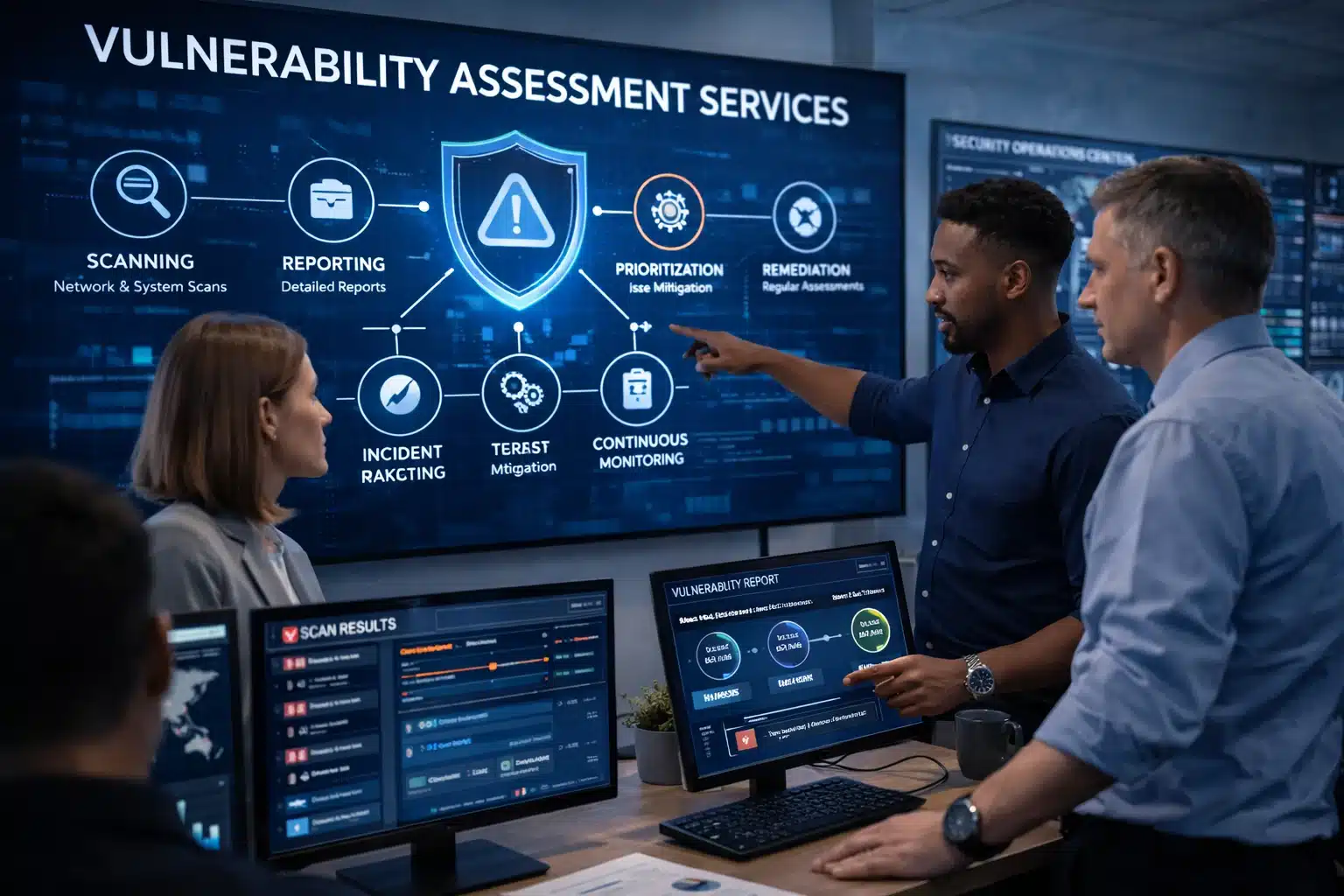
Modern vulnerability assessment services have shifted toward a continuous model. Instead of a “point-in-time” snapshot, these services provide a real-time stream of data regarding your exposure. This shift is necessary because your infrastructure is constantly changing.
Every time a developer pushes code or a new employee connects a device, the attack surface shifts. Without the constant vigilance provided by high-end vulnerability assessment services, these tiny changes can become wide-open doors for intruders.
The Role of Context in Risk
One of the biggest frustrations with legacy tools is the lack of context. Does a “critical” vulnerability on a disconnected printer matter as much as a “medium” vulnerability on your primary customer database? Probably not.
The best vulnerability assessment services now incorporate business context into their findings. They help you prioritize remediation based on the actual risk to your specific operations, ensuring that your IT team isn’t wasting time on “noise” while a “quiet” but deadly threat remains active.

Choosing the Right Vulnerability Assessment Services for Your Infrastructure
Not every service is built for every business. The choice depends heavily on the “shape” of your data and where it lives.
Vulnerability Assessment and Management Services for Complex Networks
For organizations with a mix of legacy hardware and modern software, a simple scan isn’t enough. You need vulnerability assessment and management services. These go beyond just “finding” the holes; they provide a structured workflow for “fixing” them.
This includes automated ticketing, patch verification, and executive reporting. By integrating these functions into a single service, you eliminate the friction between the security team (who find the problems) and the IT team (who has to fix them).
Specialized Vulnerability Assessment Cloud Services
If your business operates primarily in the cloud, your needs are fundamentally different. Traditional scanners often struggle with the ephemeral nature of cloud assets. This is where vulnerability assessment cloud services shine.
These are built to understand the nuances of containers, serverless functions, and S3 bucket permissions. They integrate directly with your cloud provider’s APIs, allowing them to spot misconfigurations that a traditional network scan would completely miss.
Key Criteria for Evaluating a Provider
When you begin the process of vetting vulnerability assessment services, you should look past the marketing slogans and focus on the practicalities of the service delivery.
Accuracy and False Positive Rates
Nothing kills a security program faster than “the boy who cried wolf.” If your vulnerability assessment services consistently flag non-existent threats, your team will eventually stop looking at the reports. You need a partner that uses high-fidelity scanning engines and has a proven track record of accuracy. Ask potential providers about their “false positive” rates and how they handle the validation of findings.
Integration with Existing Tools
Your security stack is likely already crowded. The last thing you need is another isolated dashboard. The top vulnerability assessment services offer robust APIs and native integrations with your SIEM, EDR, and ticketing systems like Jira or ServiceNow. This connectivity ensures that vulnerability data flows naturally into your existing response workflows, rather than becoming a separate “to-do” list.
Global Threat Intelligence Integration
A vulnerability is just a technical flaw until it is paired with an active exploit. The most effective vulnerability assessment services are backed by a global threat intelligence team.
These experts monitor the dark web and hacker forums to see which vulnerabilities are actually being targeted by ransomware groups. This allows the service to tell you, “You have 500 vulnerabilities, but these five are being actively exploited in your industry right now.”
- Scalability: Can the service handle your growth over the next three years?
- Ease of Use: Is the dashboard intuitive enough for a junior analyst, or does it require a PhD to interpret the data?
- Compliance Mapping: Does the tool automatically map its findings to frameworks like SOC2, HIPAA, or GDPR?
The Strategic Impact of Professional Assessment
Why do we do this? Beyond the obvious goal of not getting hacked, there are significant business advantages to maintaining a rigorous assessment schedule.
Improving the Security Culture
When you implement professional vulnerability assessment services, you send a message to the entire organization that security is a priority. It creates a “closed-loop” of accountability.
When developers see that their code is being scanned for flaws in real-time, they become more conscious of secure coding practices. When IT managers see their “patching latency” tracked on a dashboard, they prioritize maintenance over more visible but less critical projects.
Reducing the Cost of a Breach
The data is clear: companies that find and fix their vulnerabilities proactively spend significantly less on incident response. According to recent research, the global average cost of a data breach is approximately $4.44 million, but firms with extensive security AI and automation—including robust vulnerability assessment services—save an average of $1.9 million per incident. You can find more detailed breakdowns of these figures in the latest 2026 data breach report.
Common Pitfalls to Avoid
Even with the best intentions, it is easy to make a wrong turn when selecting vulnerability assessment services.
- The “Check-the-Box” Mentality: Choosing a service solely because it’s the cheapest way to satisfy a compliance requirement. This often leads to a false sense of security while leaving major gaps unaddressed.
- Ignoring “Shadow IT”: A service is only as good as its discovery engine. If your assessment services don’t find the unauthorized cloud instance your marketing team set up, they can’t protect it.
- Failing to Act on the Data: Finding the vulnerability is only 20% of the battle. The real value is in the remediation. Ensure you have the internal resources to actually fix what the assessment services find.
Conclusion: Securing the Path Forward
Choosing the right vulnerability assessment services is one of the most consequential decisions an IT leader can make in 2026. It is the bridge between “hoping” you are secure and “knowing” where you stand. By prioritizing accuracy, cloud-readiness, and contextual risk, you can build an infrastructure that isn’t just “hardened” against today’s threats, but is agile enough to adapt to whatever the next year brings.
Whether you are looking for specialized vulnerability assessment cloud services for a nimble startup or comprehensive vulnerability assessment and management services for a global enterprise, the goal remains the same: clarity.
When you have a clear, real-time view of your flaws, you have the power to fix them before they become a headline. High-quality vulnerability assessment services provide that clarity, turning the “unknown unknowns” into a manageable, prioritized roadmap for defense.


